Helpful Hints for Growing Homesteads

Recent Posts

Free Help for your Garden, Homestead, and Farm from all 50 States

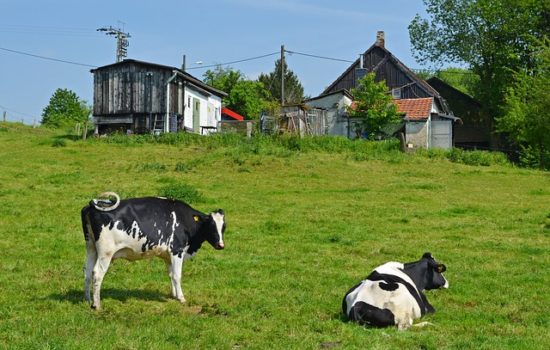
Homestead Holstein Cows in Pasture

The extension service has the answers to most of your agricultural questions and needs.  There are local extension offices and agents nationwide in the U.S.  Every State in the U.S. has an extension website.  All of the websites have contact information for your local agent. 

Many of the websites have much more content to answer questions and provide a major resource for us do it yourself farmers, gardeners, homesteaders, and backyarders.

The extension service began early in the 1900’s to share ideas among farmers to improve.  Over the years the extension service has become associated with Land Grant Schools to get the most current and best information and ideas to create better farms.  

As people began to move from the farms into the cities the extension service adapted to do more than agriculture programs.  They now cover agriculture, finance, youth development, natural resources, food and health, leadership, and host more.

I have gone to every states extension service site and found that all the sites are not created equal. All of the sites have contact information to get a hold of your local office, but beyond that some of the sites have amazing helpful content and services.  

Most of the extension service sites have information that is specific to the State and area they serve. However much of the information can be used for everyone.  I live in the West, but I find that Maines extension service site has a ton of information that is applicable to me.  

I will list every States site and links below.  Please read through and click on the links there to find all kinds of great information. 

Here is my list of top 20 favorite Extension Service Sites that are awesome.

There are the top Doctorate professors, students, and Universities that publish information for everyone to use to create better farms, homesteads, gardens, and communities. The information is vast and rich.

*Alabama 

*Arkansas 

*Colorado

*Delaware 

*Georgia

*Idaho

*Illinois

*Iowa

*Kansas 

*Louisiana 

*Maine 

*Nebraska

*North Carolina

*Ohio 

*South Carolina 

*Tennessee 

*Texas 

*Vermont 

*Virginia 

*Washington

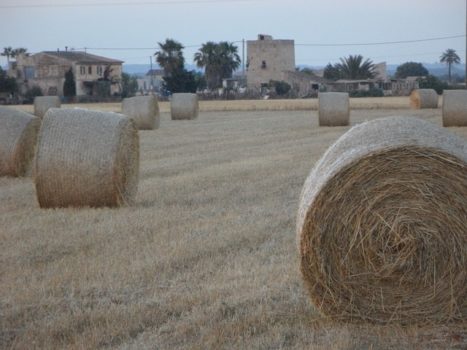
Rolled Straw Bales in the field
Rolled Straw Bales in the Field

The 50 Sate Links

The following paragraphs have links to all 50 states extension service sites. They are a wealth of great information. Due to the changing nature of Universities some of the links may need to be updated, but I have checked and rechecked to make them as current as possible at the writing of this article.

*Alabama 

The Alabama Extension service has a ton of great free information that gets added to regularly. The topics available are easily navigated from the home page and include:

4-H 

Farming 

Fish and Water

Food Safety 

Forestry and Wildlife 

Home and Family 

Lawn and Garden 

Urban Extension

This site is a wealth of interesting informative articles that can be applied to the backyard beginner to the seasoned farmer.  A few of the articles that caught my attention are solutions to the problem with growing alfalfa in the South East, Urban solutions to making a profit in smaller gardens, and a fish day for families to discover all about the fish available in Alabama.

I found myself spending some time gaining knowledge about all kinds of stuff.  I live in the West, but I found that much of the information was applicable to me and my situation growing crops and raising livestock.  I strongly recommend the Alabama extension service website for great free information.


Alaska 

The Alaska Cooperative Extension service is full of really interesting information.  Most of their information is in PDF format.  It is readily downloadable and has very location-based information.  Due to the short growing season many Alaskans have incorporated greenhouses into their garden and crop production.  They have good information on greenhouse use.  

In Alaska there is a lot of hunting a fishing for food.  The extension service website has good information on preserving the fish and game harvest available in Alaska. In fact, food preservation is heavily explored on their site.  Due to the need to preserve the harvest and wild food for the long winter season they have great information on home preservation from canning to drying and fermenting.  

The site has the following sections:

4-H 

FFA 

Agriculture 

Workforce Development 

Family

Food and Health

Insects and Invasives 

Lawn and Garden 

Natural Resources 

While not as polished as other websites I found the information on the Alaska Cooperative Extension Service website to be great.  Some articles could use some more information, but they are eager to answer questions and offer help.

They offer some really interesting classes from Seaweed farming, to reindeer husbandry, to becoming a master gardener.

The Alaska Extension Service is also the place you can apply for grants for people with Disabilities, called the AgriAbility program.


Arizona 

This extension service is associated with the University of Arizona.  Their website needs a bit more work to have the topics more easily navigated.

You can find links to their content through the Explore link on the home page.  

One thing that I found that would be really helpful if you live in the Arizona area is how to contact your local extension office.  Arizona is very divers in geography from high desert, Snow covered mountains, to hot arid desert and highly populated cities.  There is an extensive network of local offices and can address the needs that the local area is having.


*Arkansas 

This site is absolutely awesome!  There is so very much information that is easily navigable.  Agriculture is a huge part if this Arkansas economy, so they do a really great job with their extension service.  There are articles on big agriculture and farming as well as a lot of information for the small acre and backyard gardens.  

One article that caught my interest is this one on container gardening.  Two retired guys decided to figure out the best way to consistently grow vegetables in containers.  After 30 years of trial and error they explain how to grow container gardens successfully. 

The site is categorized in the following links:

Farm and Ranch 

Yard and Garden 

Business and Communities

Environment and Nature

Health and living 

4-H and Youth 

As with all extension service sites there is a lot of geographic specific information, but much of the information is applicable to anyone.


California

The California extension service is associated with the University of California.  They have an extensive network of agents to service the entire state well.  You can click on the county you are interested in and the contact information of the service representative is displayed.

The website is pretty challenging to navigate.  There is some valuable information with the following focuses:

4-H and Families 

Agriculture and Pest Management 

Environment and Natural Resources

Food and Health 

Innovation and Economic Development 

Yard and Garden 

One thing that is interesting that the California extension service is offering is a Master Food Preserver course.  

*Colorado

This is a fairly good website.  It is a little challenging to navigate but has some great information as you seek you way around. The content is categorized in the following topic pages:

Agriculture 

Animal Health 

Drought 

Energy 

Home, Family and Finances

 Insects 

Natural Resources 

Nutrition, Food Safety, and Health

Small Acreage Management 

Water 

Yard and Garden 

4-H and Youth Development 

A couple of good things for the small acreage and backyard farmer are:

A newsletter that comes out every season.  They have a Winter, Spring, Summer, and fall edition.  You can subscribe hereYou can search back issues for a host of topics. When you look through the back issues you will find a wealth of information from ag business plans, to forestry, to raising sheep, to good land management.  I found the newsletter to be particularly well done and informative with practical information I can apply to my projects in Utah.

Another really great thing is a new App and website that has all the information you need to preserve almost any fruit or vegetable.  They have instructions and information on how to freeze, can, dry, pickle, jam and jelly, and ferment fruits and vegetables all within a few clicks. This preservation App is easily navigated and has simple direct instructions.  

It also has an interesting feature where you put in your elevation.  Your elevation really matters in food preservation.  Water boils at different temperatures depending on your elevation.  The boiling and blanching times will vary as well.  You need the correct time to kill harmful bacteria.  The App is called Preserve Smart and can be found here. 


Connecticut

As with the other extension services there is some good information available.  There are some great pdf format articles on the home page. They seem to focus on the business aspect of agriculture.  There is good information on business plans for farmers and gardeners.  They also answer questions on regulations, insurance, risk management, and agricultural loans and grants.

The Connecticut Extension Service has links to two free Apps that are really interesting.  

  1. The Rain Garden App. Here’s the link to it.  This is an App that will help planning a rain garden with video tutorials, articles, diagrams, and photos.  It will help you in plant choice, maintenance, and care of a rain garden.
  2. The Kid Eats App.  Developed by New Mexico State University in their Innovative Research and Extension program.     Here’s the link to the Kid Eats App.  This one is really fun!  They have all kinds of educational videos on to teach kids how to cook healthy recipes. It’s recommended to kids from grade 3-6. It’s such a great idea to help teach kids to eat healthy.  

The information is broken down into the following areas:

Agriculture

Environment 

Family and Community 

Food 

Garden

Health 

4-H and Youth 

*Delaware 

This is an absolutely impressive extension service.  The Delaware Extension service has done a lot of outreach to address issues and they have the results, or impact of their projects.   Their projects are very timely important and are having great results.

Their website is a great resource for all things garden and farm.  They focus mainly on smaller gardens and acreage.  They have a ton of information from the basics of beginning gardening to bio energy to improving STEM education through 4-H.  I very impressed with this extension service and how helpful they are.

Not all of their content is self-created.  They utilize other extension services and utilize their strengths to give answers to questions for the people they serve.  This is actually a great thing, because their site is fairly easy to navigate through and you can find help quickly without being bogged down.  

The content is categorized in the following pages:

4-H Youth Development 

Agriculture and Natural Resources 

Lawn and Garden 

Family and Consumer Sciences 

 
*Florida 

Florida has a huge amount of agriculture.  Agriculture is responsible for a large portion of the economy in fact it is the second largest industry in Florida.  Agriculture has over $160 billion in output.  With this in mind their Extension Service, associated with the University of Florida, is really up to the task.  

Plenty of information and support is available through the extension service.  There is information and expertise available for large farms and ranches, home owners, and small acreage farms.  In fact, 90% of all farms are categorized as small farms in Florida.

The categories supported are:

Agriculture 

Natural Resources 

4-H Youth Development 

Lawn and Garden 

Family Resources 

Online learning Opportunities 

Overall the Florida Extension service site it full of great information.  Much of the information is applicable for anyone who is farming from backyard gardens to small acreage to large scale agriculture pursuits.
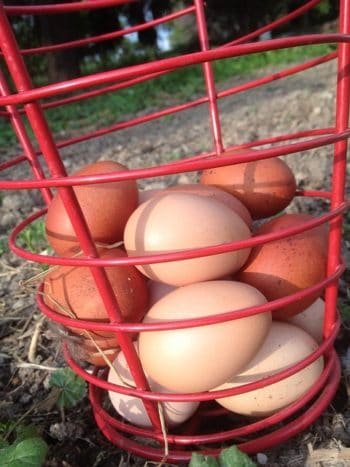
Gathered Farm Fresh Brown Eggs
Farm Fresh Brown Eggs

  
*Georgia

The extension service site for Georgia is associated with the University of Georgia.  They have an informative site that is easily navigated. They have it broken down into sections and subsections after that.  

Once you get into the sub sections some or better covered than others, but even the less informed articles give some information and a starting point.  Some of the sub sections have a wealth of knowledge. Most of the better sections have to do with the major crops grown in Georgia.

The Topic Areas are:

4-H and youth Development 

Animal Production 

Environment and Natural Resources 

Money Family and Home 

Filed Crop, Forage, and Turfgrass production

Food and Health 

Fruit, Vegetable and Ornamentals Production 

Lawn Garden and Landscapes http://extension.uga.edu/topic-areas.html#g

Weeds, Diseases and Pests 

After clicking through these topics, I find that not all the topics area covered equally.  Some of the links are dead, and some of them don’t really have much information.  They do all refer you to contact an agent.  I would assume that the agents could handle the localized issues, but for good information beyond local contact this site is lacking a little. They do offer some intriguing programs and Workshops, but many of the links to them are dead.

.   
Hawaii 

The Hawaii extension Service is associated with the University of Hawaii at Manoa.  This extension service site has a lot of links similar to other links.  I found the site to be very specific to Hawaii and its unique geographic location. 

The information is easily accessed on the program page

It appears that many volunteers are used with workshops and further education on agriculture and gardening.  The site has some gems of knowledge especially for those living in Hawaii.


*Idaho

One of the most valuable resource from the extension service in Idaho, besides the agents themselves, are the publications available for download. They are available in PDF format.  There are a lot of well researched publications available. The majority of the information is applicable to more than a localized Idaho area.

The publications are available here. 

There are even a lot of these publications available in Spanish.  

Agriculture is a huge part of Idaho’s economy, so the information is vast.  They have information available from the large farm and ranch owner to the small backyard gardener.  They are tackling complex issues such as water usage, which is key in the west; as well as climate change and how to change agricultural practices to handle the changes going on.

The super valuable part of this extension service is how the faculty and students of the University are adding to the site.  You can hear podcasts and see videos that professors and graduate students have made. The content is very current and applicable.

The information about the different programs on the site are located on the Program and Project page. 

*Illinois

This website is huge! This extension service has a lot of information on big agribusiness.  Most extension services offer continuing education without college credit, not the case with the Illinois extension service.  They offer college credit with many of their courses. 

The Illinois Extension Service has broken down their programs and information into two main categories and three smaller categories.

The two big categories are: 

Agricultural and Natural Resources and Family and Consumer Sciences.

Many of the articles are for big agriculture, but a lot of the information is relevant to the small farmer, gardener, and homesteader.

Illinois Manure Share. 

This is caught my eye! This is where farmers with excess manure are connected with gardeners and growers that want manure.  It’s such a simple concept, but so very beneficial. I thought it was a brilliant service to offer.  

Horticulture 

This is one of my favorite links.  It over 60 links to sites and articles about growing plants, trees, flowers, etc. Many of the links are tailored to children and the 4H program.

Energy and the Environment.  

This particular link has information about ethanol, compost, bioprocessing, and ways to protect your home and environment.

Local Foods and Farms. 

The topics under this link are: Small Farms Winter Webinar Series, Fruit Trees, Insect Identification, and Putting Small Acres to Work.  The best information I found available under the additional topics under the “Putting Small Acres to Work” link. The additional topic links are at the bottom of the page. The additional topics are:

  • Beekeeping
  • En Espanol
  • Farm to Schoo
  • Farmers’ Markets
  • Food Safety
  • Fruit Production
  • Grants and Loans
  • High Tunels
  • Job Opportunities
  • Livestock
  • Local Food
  • Marketing and Economics
  • Natural Resources
  • Organics
  • Small Farm Technical Bulletins
  • Tri-State Publication Archives
  • U of I Research Centers
  • Vegetable Production
  • Webinars

The Subheadings under the Family and Consumer Sciences are:

Consumer Economics Lots of information on money and finances

Family Life 

-Interesting information from cleaning stains to raising babies.

Nutrition and Wellness 

-Great information on preserving food, nutrition, and diabetic recipes

Illinois Nutrition Education Programs 

The three smaller categories are:

4-H and Youth 

Community and Economic Development  

Special Initiatives, which includes

Extension outreach 

En Espanol

Overall this site is excellent.  There are some dead links, but it has a lot of valuable information that is pertinent to anyone who is doing any kind of agricultural projects.  

Indiana

The extension service for Indiana is associated with Perdue University. 

The topics are easily navigated from the menu bar on the home page.  The topics include agriculture, community, environment, family, food, garden, youth.

The extension service makes most of their posts to their Facebook pages.  

The Facebook pages are:

Diversification 

Marketing 

They also have a Resources link on the opening page.  I found this page to be helpful.  You need to dig a little, but you can find good information if you are a larger farmer or rancher.  Many of their links lead out to other sites with good information.  There are however a few dead links, so don’t be surprised if you need to go elsewhere to get the information you need.
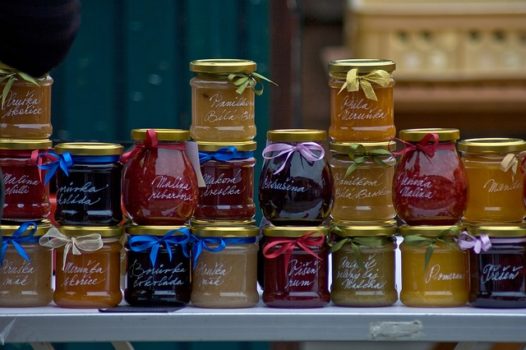
Farmers market jams and jellies
Jams and jellies available at a Farmers Market


*Iowa

The Iowa Extension service is associated with Iowa State University.

There are some good links to information on farm insurance, marketing, disaster relief, and a lot of social media links.  The navigation through the site is through 5 main pages navigated from the top menu bar “Learn More about…”.  From these pages you find a ton of information.  

The 5 pages are:

Economic Development 

Food and Environment 

Health and Well-being 

 Kids and Teens 

Disaster Recovery 

There are a lot of publications available for free, or a nominal fee.  Many courses are available as well.  

One link that caught my eye I a great link for beginning farmers here

They also have an answer line.   Where you can get information and resources.  There are over 40 years of excellent experience available here.  With hotlines, email, and social media to use.  The answer line is a cooperative effort by a few different extension services and can be contacted toll free.


*Kansas  

This Extension Service is associated with Kansas State University.

On the opening page they have a lot of good current news articles.  The site is broken into 7 pages beyond the home page:

*Agriculture

Which has a ton of subjects navigated on the left side of the page, including:

Crops  

livestock 

horticulture 

wildlife 

forestry 

water 

environment 

farm management 

Community 

This page is devoted to helping communities prosper and thrive.  Two specific articles I found helpful are on Grant writing, and entrepreneurship. The headings on the left side are:

Leadership 

Civic Engagement

Business 

Natural Disasters 

Northwest Kansas Resource 

Research https://www.ksre.k-state.edu/community/research/

Specialists 

Families 

Which has topics that help strengthen families and in so doing strengthen communities. This page has the following links:

Relationships

Child Development

Youth and Teens 

Adult Development and Aging 

Family Consumer Science 

Food 

The links that I find to be of good information here is the Food preservation and Gardening links. The topics under this page are:

Food Safety 

Nutrition 

Food Business 

Food Preservation 

Meat Science 

Food Science 

Gardening 

Food Pests 

Master Food Volunteer

Health 

The health page has the following links:

Nutrition 

Wellness 

Health Care 

*Lawn and Garden 

For the homesteader and backyard gardener as swell as those growing plants for profit, here is a powerhouse page with a wealth in information and videos.  Kansas Extension service has done well with this part of their site.  The topics on this page are:

Home Lawn and Gardening 

Master Gardener

Commercial Fruits and Vegetables 

Commercial Turf and Ornamental 

Forestry

4-H 

The 4-H program is heavily supported in Kansas.  There are several opportunities for young people to learn hands on about agriculture, family life, and business in the Kansas 4-H program.  The links on the 4-H page are:

4-H Event Registration 

4-H Calendar 

Enroll and Reenroll in 4-H 

Kansas 4-H tip sheet 


Kentucky

The extension service for Kentucky is associated with the University of Kentucky.  This site has some good information.  It isn’t my first pick to go to for information, but they do have an extensive network of extension service agents available to help. They have 4 major areas of programs. They are found at the bottom of the Home page

1-Farms Gardens and Environment

2-Nutrition, Family and Homes

3-4-H Youth Development

4-Community and Economic Development


*Louisiana 

The Extension Service for Louisiana is supported by Louisiana State University.  Agriculture is a large part of Louisiana’s economy. The extension service site reflects that.  There are a lot of resources and information on large scale farming and ranching. Apps, videos and articles can be found on a large variety of agricultural topics.   

There are also some helpful articles, videos, and podcasts for a smaller grower and backyard gardener.  They have done a great job and have the site broken down into topics accessed from the home page.  One of my favorite of this site is the Lawn and Garden link.  Here are the linking pages:

4-H Youth Development 

Environment and Natural Resources 

Community 

*Lawn and Garden 

Food and Health 

Crops 

Livestock 

Family and Home 

Money and Business 


*Maine

The University of Maine hosts the Maine extension service site.  This site is easily navigated through buttons on the home page which take you to a page all about that topic.  One of my favorite pages is the agriculture page.  

The agriculture page has extensive information from big farming to small beginner agriculture.  These buttons will transfer you to a location on a list of links.  The information is very helpful and applicable.  I find the site to be jammed full of information and helpful content, links, and videos.

The different pages are:

Agriculture 

Business and Community 

Food and Health 

Garden and Yard 

Home, Family, Youth, 4-H 

Natural Resources 

Insect Pests, Ticks and plant Diseases 

*Maryland

The University of Maryland hosts the Maryland Extension service site.  This is one of the most easily navigated extension sites. The information and content are constantly being added to and updated.  They are really trying to make the information accessible and pertinent to big growers and producers to small scale projects.

This site is a great one for all kinds of information, content, links, videos, and is constantly being updated.  One of my favorites even if I live in the west, a lot of the content is applicable to my needs.

The different pages include:

4-H and Youth 

Agriculture 

Environment and Natural Resources 

Food and Nutrition 

Health and Wellness 

Home Gardening 

Money 

Water and Chesapeake Bay


Massachusetts

The extension website for Massachusetts is hosted by the University of Massachusetts Amherst.  The website has good information but is a little more difficult to navigate through the site.  There are a lot of links to fact sheets and research.  They have some exciting things they are doing with their outreach and research.

You navigate the site through a menu bar near the top of the home page.  The two pages I found to be of greatest use for me are:

Extension outreach 

Resources 


*Michigan 

Michigan State University runs the Michigan extension service site.  This is an excellent site easily navigated in a blog style. It is broken down into similar topics or programs as other extension service sites and has valuable information and content.  

There are newsletters that you can sign up to keep up on all their current information, conferences, and research.  My two favorite links that seem most applicable to me are the Agriculture page, and the food and health page.

The different pages are:

4-H 

Agriculture 

Business

Community 

Family 

Food and Health

Lawn and Garden 

Natural resources 


Minnesota 

The University of Minnesota hosts the Minnesota.  This is another excellent site.  They are constantly updating information on research, programs, and information. There is a lot of things going on statewide.  

The site is a little clunky to navigate, but it well work the effort to look through.  You will find a lot of information on most of the subjects that homesteaders, farmers, and small agriculture.  One thing that Minnesotans know is winter.  There are some interesting things that they have come up with to deal with the winter and agriculture.

The page links are:

Animals and Livestock 

Commercial Fruit and Vegetable growers 

Community Development 

Crop Production 

Families and Youth 

Food, Health and Nutrition

Home and Financial Management https://extension.umn.edu/home-and-financial-management

Insects 

Managing a Farm 

Natural Resources 

Yard and garden 


*Mississippi 

This extension service site is associated with Mississippi State University.  It is one of my favorite sites.  This one is easily navigated with a lot of relevant content. 

The site has daily and weekly updates.  Great information available through podcasts, videos, and articles.  A lot of the content is geographic in nature, but most of the information is applicable to all agriculture, large or small.

The pages are broken up this way:

4-H 

About Extension 

Agriculture 

Community 

Family 

Food and Health 

Insects 

Lawn and Garden 

Natural Resources 


Missouri 

The University of Missouri hosts the Missouri extension service site.  This site has access to over thousands of different articles, videos, podcasts, and news.  The best way to navigate this site is by using the search option.  You can get amazing information if you know what you want information about.  

It is interesting to just click around, but you may find that you will use up a lot of time searching and getting interested in all that is available.  A lot of online courses are available to take at your own pace.  

There are a lot of newsletters available to sign up for as well when you create an account on their site


Montana

Montana State University runs the Montana extension service site.  This site isn’t as robust as other extension service sites.  It is easily navigated and has good information. The emphasis pages are:

Youth 

Ag and Natural Resources 

Community 

Family and Home 

Yard and Garden 

*Nebraska

Nebraska’s extension service site is run by University of Nebraska-Lincoln.  This site has a great search option.  I would suggest using it if you have some specific topics you are interested in.  There is an extensive resource of agriculture information here.  

The educational programs are:

Beef Systems 

The learning Child 

Community Environment 

Community Vitality Initiative 

Cropping and Water Systems 

Food, Nutrition, and Health 

4-H Youth Development 

Disaster Recovery resources 

There is a lot of free apps, blogs, and newsletters available under the emphasis.  One of my favorite parts of the Nebraska Extension Service Site is the extension TV.  This has a ton of video information available.


Nevada 

The University of Nevada manages the Nevada Extension Service Site.  This site has some good information, and is best accessed through the publication search option.

The major programs that Nevada’s extension service are on the following pages:

Agriculture 

Children, Youth, and Family 

Community Development 

Health and Nutrition 

Horticulture  

Natural Resources


New Hampshire 

The New Hampshire extension service site is run through the University of New Hampshire.  This extension site is set up like a blog site with several articles under topic pages.   It is full of engaging articles and has good, relevant, and often enjoyable to read content. 

The topic pages are:

4-H Youth development 

Agriculture and Horticulture 

Community and Economic Development 

Home Yard and Garden 

Natural Resources 

Nutrition and Healthy Living 

STEM Education 

Citizen Science 

Youth and Family Resiliency

The most recent articles are on their blog


New Jersey 

Rutgers University hosts the extension service site for New Jersey.

They have a great opportunity for continuing education.  The courses are available here.  Some of their programs bring valuable certificates

There is a good menu bar at the top of the site for navigation.  They also have the content broken down into topics similar to other extension service sites.  It has great information to help farmers, gardeners, and homesteaders.

The topics are:

Agriculture 

Environment and Natural Resources 

Fisheries and Aquaculture 

Food Nutrition and Health 

Home, Lawn, and Garden 

Youth and Community Development 


New Mexico 

New Mexico State University runs the New Mexico extension service site.  The university has a college specifically for agricultural, consumer, and environmental sciences.  Their slogan is expert advice for everyday questions.

The site uses text links more than photos and videos.  The information is great, but not as visually stimulating as other sites.

The topics are:

Economic development 

Energy and Water 

Farm and Ranch 

Health and Well Being 

Natural Resources 

Yard and Garden 

4-H Youth Development 

Multimedia, Video and Apps 


New York 

Cornell University host the New York extension service site.  This a good extension service site.  I found the small farms link off of the Agriculture program link to be informative.  

If you do some digging, you will find some great information.  There are also a lot of news articles on the home page.  

The program areas are here

Agriculture and Food Systems 

Community and Economic Vitality 

Environment and Natural Resources, Sustainable Energy, and Climate Change 

Nutrition, Food Safety and Security, and Obesity Prevention 

4-H Youth Development and Children, Youth, and Families 

  
*North Carolina 

The extension service site for North Carolina is run by North Carolina State University. Absolutely and excellent site.  This site has a ton of great informative content. There are articles, links, and videos. There is a thriving State and community supported agriculture environment in North Carolina.  This site is one of my favorites for ideas, information, advice, content, and links to other resources beyond North Carolina.

There are a lot of topics available that are applicable beyond the borders of North Carolina.  I live in the West and find this extension service site to be very helpful.  If you have questions or ideas, I would recommend this site as a resource to look at before you begin a project, or one of the first sites to look at for answers to questions. 

The search links are:

Events 

Extension Administration 

4-H Youth Development 

Agriculture and Food 

Community 

Forest Resources

Health and Nutrition 

Home and Family 

Lawn and Garden

Soil Water and Air 

Publications and Fact Sheets 

Departments and Partners 


North Dakota 

North Dakota State University runs the North Dakota extension service site.  This is a solid site with a lot of great information.  It isn’t as visual as other sites and doesn’t have as much multimedia, but has great news articles and content added consistently with a lot of searchable publications. 

The topics they break their information into are:

4-H Youth Development 

Children Family and Finance 

Crops 

Disasters 

Farm Economics 

Lawns gardens and Trees 

Leadership, Volunteers, and Communities 

Livestock Management 

Natural Resources 

Nutrition and Food Safety 

Pesticides

Soil 


*Ohio 

The extension service site for Ohio is hosted by Ohio State University.  This extension service site is great.  It has a lot of great informative content.  They are also very progressive with social media, videos, and outreach.  

One thing in particular is interesting, is that they are having a film festival.  It is called Germinate and is an international festival.  The goal is to show that rural communities and those that farm, ranch, and grow food are more than what popular media stereotypes as backward and dumb.  With the use of YouTube, Netflix, Hulu, and Apple iTunes, etc. there is a lot of opportunity to show what rural agriculture is really like.  I think that is just a fun and interesting way to educate people on their food supply and how it is produced.  

The site is broken up into 4 main areas:

4-H Youth Development 

Community Development 

Agriculture and Natural Resources 

Family and Consumer Sciences 

 
Oklahoma 

Oklahoma State University hosts the Oklahoma extension service site.  This site is organized by text links.  I find it to be not as user friendly to navigate.  I also find that some of the links are dead.  Not the best extension service site for sure.  I am sure there is good information available here, just not easily found.  

The site is broken into program areas navigated from a menu on the home page.  

The program areas are:

4-H and youth 

Ag Business, Finance and Marketing

Community and Rural Development 

Crops 

Family and Consumer Sciences 

Gardening, Insects, and Pest management 

Livestock 

Natural Resources, Environment, and Ecology 

Weather

Extension Fact Sheets 

 
Oregon 

Oregon State University runs the Oregon State extension site.  The site is ok.  It is broken into some interesting topics.  A lot of the information is old but still relevant.

The topics are:

Animals and Livestock 

Business and Economics 

Community Vitality 

Crop Production 

Families and Health 

Food 

Forests, Woodlands, and Rangelands 

Garden, Lawn, and Landscape 

Outdoors and Environments 

Pests, Weeds, and Diseases 

Water 


Pennsylvania

Penn State University runs the Pennsylvania extension service site. The Pennsylvania extension service offers a lot of workshops that you can sign up for on their site.  There is some good information on their website, but it has a way to go to be really helpful.  

The sire has the information divided up and navigated from a drop down menu from the top of the page. 

The topics available are:

Animals and Livestock 

Forage and Food Crops 

Trees, Lawn, and Landscape 

Pests and Diseases 

Forests and Wildlife 

Food Safety and Quality 

Water 

Energy 

Business and Operations 

Community Development 

Youth, Family, and Health 

Rhode Island 

The University of Rhode Island hosts the Rhode Island extension service site.  It is a good site with a lot of workshops and local information.  There are also some good articles and links to other extension services for information.

Water Resources 

Energy Literacy 

Land Stewardship 

Food Systems and Agriculture 

Healthy Lifestyles 

4-H 


*South Carolina

Clemson University hosts the South Carolina extension service site.  Agriculture is the number one business for the state of South Carolina, and the extension service site represents that. The extension service site has a lot of information for farmers, gardeners, and the backyard enthusiast.  

They have produced several articles and videos with good applicable information.  This site does take a little bit to get used to where topics and workshops are located, but there is a lot of great information. Much of the site is set up as a blog . 

There is a search tool, and that would be a good tool to use to find what information you need quickly. There is an advantage to just looking around the site.  You will find new and interesting ideas and concepts to help with your farm, ranch, garden, and backyard. 

My favorite section is the Horticulture section. I found a lot of new ideas to apply to my gardening efforts.  This section has some great articles and videos to help anyone who wants it.

The different categories are found on the home page.  

The pages are:

4-H and Youth Development 

Agribusiness 

Agriculture Education 

Agronomy 

Food Systems and Safety 

Forestry and Wildlife 

Horticulture 

Livestock and Forages 

Rural Health and Nutrition 

Water 


South Dakota 

The extension service site for South Dakota is run by South Dakota State university. Agriculture is the number one industry in South Dakota and the extension service site is a good one.  There are some good tools and information available about agriculture.

This is a smaller site as extension service sites go, but they have great content and information. They also have some cooperative efforts with other extension services that will help you get the information that you need.  They have made some great informative videos available on YouTube for free.  

The major pages on this site are:
Agriculture 

4-H 

Garden and Yard 

Food 

Family 

Community 

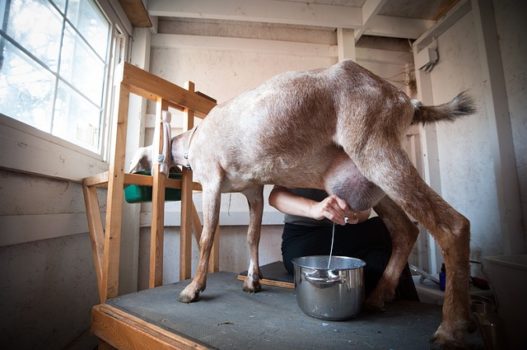
Hand Milking a Dairy Goat


*Tennessee 

The Tennessee extension service site is found at the university of Tennessee.  The Tennessee extension service site is a great one.  Much of the content is geographically relevant. There are however several articles, tools, and content that is applicable to most people.  

Much of the information is easily found by searching through their site.  They are embracing social media and have many social media links. As with many extension sites it has a YouTube channel with a lot of great videos

The site can be navigated through the following pages:

4-H Youth Development 

Agriculture, Natural Resources, and Community Economic Development 

Family and Community Science 

Publications 


*Texas 

Texas A&M runs the Texas extension service site.  This site is huge.  There is a lot of information to here.  Agriculture is a large part of the Texas economy and there are a lot of tools, courses, and information available.  

With the site being so large there are a few ways to navigate through it.  It is visually interesting and enjoyable to see all that the Texas extension service has to offer, from job training to raising beef to using drones to monitor cotton fields to earth kind landscaping.

The site is broken down into 4 program areas:

Volunteer Programs 

Agriculture and Natural Resources 

Community and Economic Development 

Family Community and Health 


Utah 

Utah State University hosts the Utah extension service site.  This is a good site with lots of links with good information.  They are adding to the site consistently and have the newer articles on the home page which reads like a blog site.  

A lot of the information can be obtained through the browse feature on the right side.  Much of their course information is available through online access for a limited access fee.  

The site is also broken down into 4 main program areas:

Agriculture and Natural Resources 

Gardening 

Home, Family, and Food 

Utah 4-H and Youth 

*Vermont 

The extension service site for Vermont is hosted by the University of Vermont.  It has the Nations longest running daily farm television program called Across the Fence.  

This site is a clean easily navigated site with a lot of good content. Much of the content is focused on the region, so may not be applicable worldwide.  However, there is plenty of content that is applicable to most people.

One page in particular is of interest to me is the New Farmer Project.   

The site is organized in the following pages:

4-H and Youth 

Agriculture 

Business and Community Development 

Environment and Natural resources 

Family and Wellness 

Food and Nutrition 

Horticulture 

*Virginia 

Virginia Tech and Virginia State University run the extension service site for Virginia.  The Search feature at the top of the home page is great and immediate.  You have access to their database and find great content.  Years of research and current new information is available for free.

You can also navigate the site through its 7 main program areas:

Agriculture  

Community and Leadership 

Family 

Food and Health 

Lawn and Garden 

Natural Resources 

4-H and Youth 

*Washington 

Washington State University hosts the Washington extension service site.  The site is actually part of the Washington State University site and is linked to from the top menu bar.

The site offers a large amount of content through the Search option, Learning Library link , and the Programs link.

The Learning Library is presented more like a blog with articles.  The programs link has links directly to specific sites, blogs, and videos that are excellent in content.  

West Virginia 

The extension service site for West Virginia is run by West Virginia University.  This site has some good relevant information and is found accessible on the home page.  There are some articles called Timely Topics, and below that are the links to the main extension service programs.  

The 6 main programs are:

Agriculture 

Community Business and Safety 

Food and Health 

Lawn, Gardening, and Pests

Natural Resources 

Youth and Families 


Wisconsin 

The University of Wisconsin-Madison runs the Wisconsin extension service site.  This is a good site.  It is pretty simple in its approach.  

They have the content broken down into 6 basic sections:

Agriculture 

Community Development 

Families and Finance 

Health 

Natural Resources 

Youth 


Wyoming

The University of Wyoming runs the extension service site for Wyoming.  The extension service site for Wyoming is part of the University of Wyoming’s website.  This site does have some good content and interesting publications.  

The site breaks much of the information into 8 programs:

4-H and Youth Development 

Agriculture and Natural Resources 

Community Development 

Financial Literacy 

Horticulture 

Master Gardener 

Nutrition and Food Safety 

Wyoming School Integrated Pest Management 

Guam 

There is an extension service site for Guam.  The site is run from the University of Guam.  The site is a bit sparse and the information is pretty old, but it has some interesting content.  A major challenge that Guam has is invasive species that are taking over.  There is a large problem where native species of all kinds are becoming extinct and are a lot of journal articles about this.  

The site has some interesting outreach programs for people to encourage health, agriculture, and community development.  

The United States Department of Agriculture

The United States Department of Agriculture extension site is very robust. This site has a lot of information including the governmental regulations, bills, and laws associated with extension services.  

The site is navigated through 6 different links:

Topics 

Programs 

Grants 

Newsroom 

Impacts 

Resources 

I found the search option to be a valuable tool, otherwise I spend too much time finding interesting stuff all over the place.  

The USDA is reaching out globally as well.  There are efforts for collaborative research internationally, especially with agriculture. The interconnectedness of the world has become a major consideration with global food and crop production.   

All the sites have the contact information you need to ask questions and get information and help locally.  You can get things like your soil tested and find out great information to help from local extension service agents and offices.

I would really give the other stated besides your own a look.  You will find amazing content and information from scientists and professors from some of the best Universities in the United States, and much of it for free.


Pumpkin Cookies from Scratch

Pumpkin Cookies from Scratch (Aunt Kathy Baum)

Ingredients:

1 Cup Shortening

1 Cup Sugar

1 Cup Pumpkin – cooked and smashed (or canned)

1 egg

1/2 cup nuts (walnuts preferred)

2 cups flour

1 teaspoon vanilla

1 teaspoon cinnamon

1 teaspoon salt

1 teaspoon baking soda

(if doubling recipe, add 1 teaspoon baking powder)

Cream shortening, sugar, and pumpkin for 2 minutes.

Add egg and vanilla to cream mixture (beat on medium for 1 minute)

In a separate bowl, mix dry ingredients (cinnamon, salt, baking soda, flour)

Add dry ingredients to cream, mix well

slowly add nuts

Cook on a greased cookie sheet at 350 degrees for 12 minutes

Roasted Butternut Bisque

Roasted Butternut Bisque (Recipe from Great Aunt Janet Robinson, via Candy Fowler)


Ingredients:

4 C. cubed peeled butternut squash (abt. 1 pound)

Cooking spray

1/4 tsp. salt

1/4 tsp. freshly ground black pepper

1 Tlb. Butter

2 Tlb. Finely chopped shallots

1 clove garlic, finely chopped

2 ½ cups chicken broth or organic vegetable broth

1 ½ C fat-free buttermilk

1 Tlb. Chopped fresh flat-leaf parsley

1. Preheat oven to 375

2. Place squash in a 2-quart baking dish coated with cooking spray. Lightly coat squash with cooking spray. Sprinkle squash with salt and pepper; toss well. Bake at 375 for 30 minutes or until tender.

3. Melt butter in a Dutch oven over medium heat. Add shallots and garlic to pan; cook 3 minutes, stirring occasionally. Add squash and broth to pan; bring to a boil, and cook 2 minutes. Stir in buttermilk. Reduce heat, and cook 2 minutes, stirring constantly. Place one-third of squash mixture in a blender. Remove center piece of blender lid to allow steam to escape); secure blender lid on blender. Place a clean towel over opening in blender lid (to avoid splatter). Blend until smooth. Pour into a large bowl. Repeat procedure with remaining squash mixture. Sprinkle with parsley

How to Plant, Harvest, Cure and Store Pumpkins and Winter Squash – and their health benefits too

A single cup of butternut squash provides more vitamin A than most people need in a day!

How to Plant, Harvest, Cure and Store Pumpkins and Winter Squash – and their health benefits too

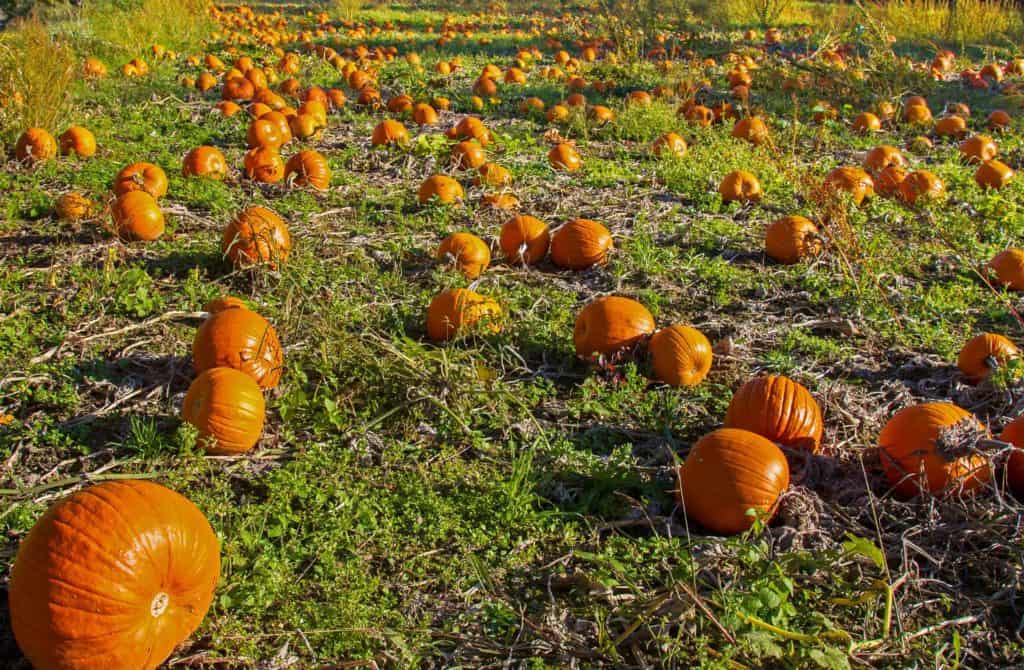
If you’re like me, autumn is your favorite time of year. When the air begins to cool, vivid colored foliage appears in the trees and on hillsides, high school and college football are in full swing, the darkness comes a little earlier, and the air seems sweet with the promise of Halloween festivities and their accompanying delicious spices. It is also the time of year when vines begin to wither, revealing plump bright colored pumpkin patches, and glowing butternut and spaghetti squash.

All of these are varieties of winter squash, whose bounty can grow through the fall and be enjoyed during the cold winter months. This article discusses the best times to plant and harvest winter squash, as well as the easiest methods for curing and storing these gourds for enjoyment during the winter months. You’ll also find a few of our favorite family winter squash recipes.

Though most winter squash is harvested in the fall, they are called winter squashes because they store well during long, cold winters. When they are most often consumed.
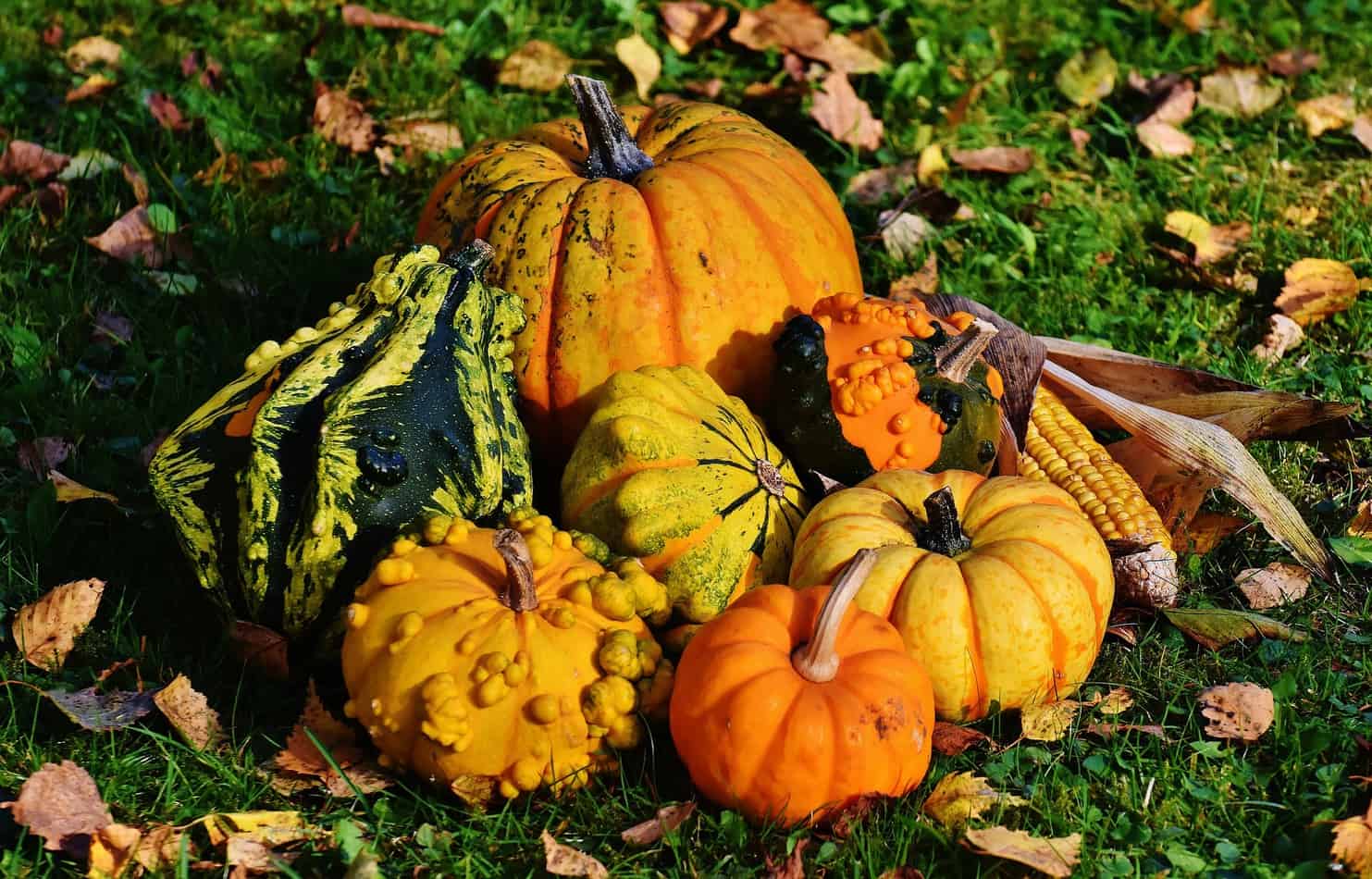
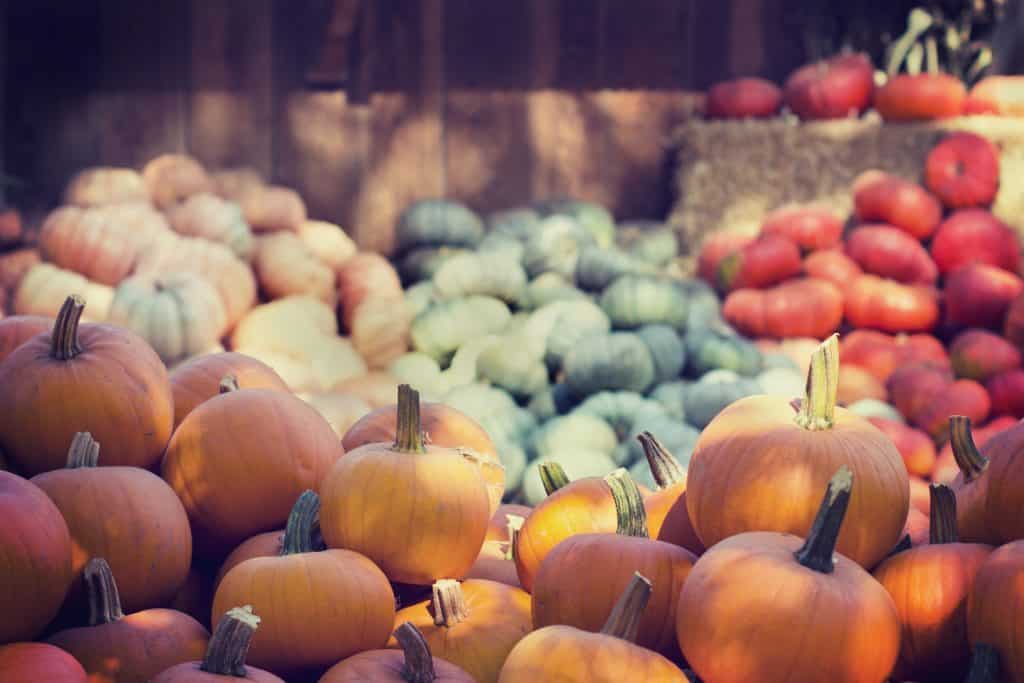
Most people don’t realize that pumpkins aren’t always orange. Though we’re most familiar with bright orange jack-o-lanterns or pie pumpkins, pumpkins also can be orange, green, white, yellow, or red!

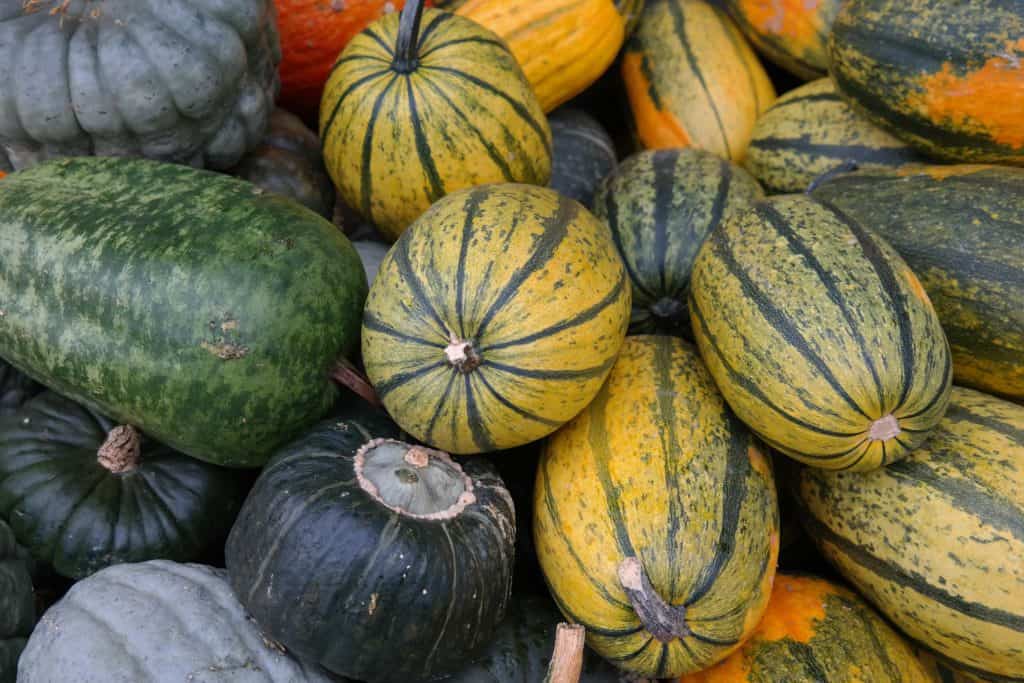
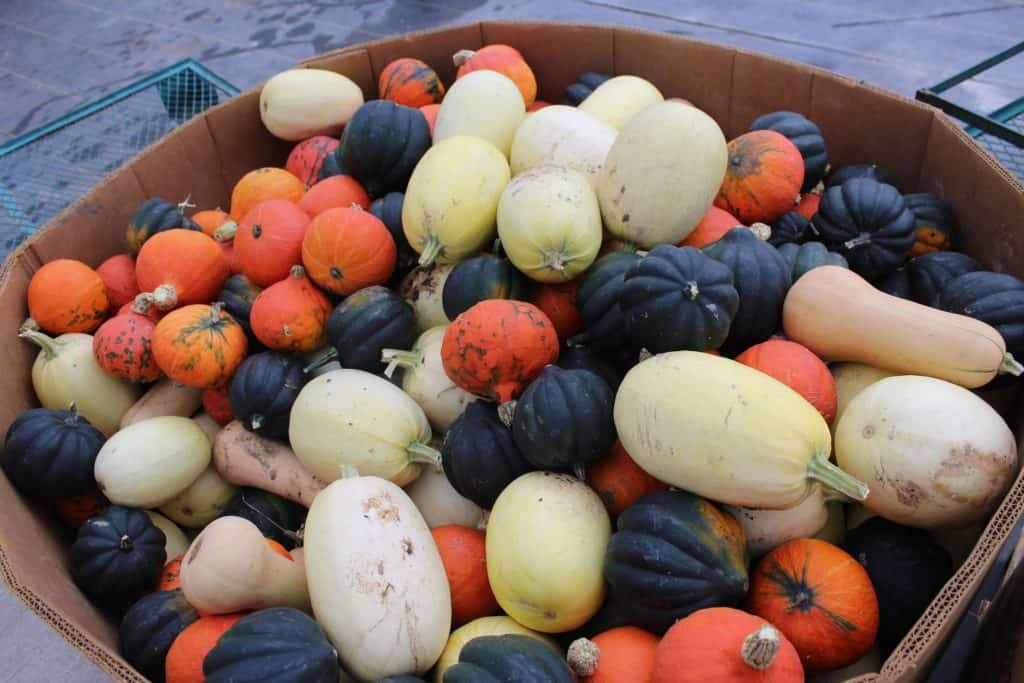
There are several varieties of winter squash, (all part of the cucubitaceae family) including pumpkin, acorn, blue hubbard, buttercup, butternut, delicata, and spaghetti. Considered fruit that grows on a vine. Many gardeners (and foodies) love winter squash because of their easy storage and flavor potential. If harvested, cured, and stored correctly, the fruit of your winter squash plants will last for months.

When to plant: Winter squash (named after the time of year it is enjoyed, as opposed to when it is grown or harvested) ripens in the early fall.

Most winter squash takes 80-110 days to fully ripen. Thus, if you desire to add some winter squash to your garden you will want to plant it as soon as the possibility of spring frost is over (and make sure you’ve got enough room available for their sweeping vines). Planting early will ensure you have enough time to let the plants mature before the first frost of winter hits. Though mature squash plants are known for their hearty nature, keep in mind that the seedlings of the winter squash plant are extremely tender and will freeze with the slightest frost.

Delicata squash is an excellent source of potassium and dietary fiber, and has magnesium, manganese, and vitamins C and B, but is not as rich in beta-carotene as other winter squash.
Acorn squash, has distinctive longitudinal ridges on its exterior and sweet, yellow-orange flesh inside. Delicata squash on the other hand has a long, narrow, cylindrical shape with grooved skin and lines that run the length of the squash. It’s skin has a creamy yellow base with green or orange, vertical stripes.

How to plant: As with any plant, you will first want to prepare the ground for planting. When planting squash, or other vine plants, you prepare the soil by forming a mound of earth, about 12-18 inches high in which you will plant the seeds. This will allow the plant to cascade as it grows, and keep water from pooling around the plant’s root, which can cause early rot. Once the mound is erected, plant five or six squash seeds directly into the ground at a depth of about one inch.

The seeds won’t begin to grow until the ground has warmed up, as they will only germinate in warm soil. Getting the seeds into the ground early is imperative however, as it takes the squash such a long period of time to ripen. (Note: If your geographic area is known for late spring cold snaps, you may choose to start your winter squash seeds indoors 5-6 weeks early, and transplant them outside in the spring when the danger of frost has passed).

It is best to plant the seeds in rich, fertile, and well drained soil, as squash plants are heavy feeders. The seeds should sprout quickly after the ground has warmed sufficiently to allow for germination. When the seedlings reach about two inches in height, you will want to thin the plants to three plants per mound, with mounds two to three feet apart. (simply removing the smaller, less hearty seedlings).

Two to three feet between plant mounds is the optimal space for squash growth potential and will avoid overcrowding. Because winter squash are vining plants, they will spread out and soon take over each mound. Don’t be surprised if your butternut squash sends out a vine 20 feet or longer.

Winter squash are related to melons like honeydew and watermelon.
The majority of winter squash varieties have a long shelf live and can last in a cool, dry place for months!

Winter squash cultivation is best accomplished by hand, or with a garden hoe, and caution must be taken not to cultivate too deeply as gourd and squash roots are typically shallow.

You will also want to watch your crop carefully for bugs such as the squash bug (Anasa tristis) cucumber beetle (of the Chrysomelidae family) or spider mite (of the Tetranychidae family) and even use row covers (when the need arises) or an insecticidal soap to deter such pests. In our garden, we apply insecticides only in the evening when our bees have returned to their hive.

Bees are essential to winter squash growth, as all members of the cucurbit family (summer squash, winter squash, pumpkins, melons, and cucumbers) produce unisexual flowers and must have pollen moved from male flowers to female flowers to produce a viable fruit.

When to Harvest: Though you may certainly enjoy your squash during the late summer, so long as the fruits have turned a deep solid color, it is recommended to wait to harvest the majority of your winter squash crop in the late fall, leaving the fruit on the vine until late September or October to ensure each plant has had time to grow a skin or rind thick enough to store through winter.

The trick is to wait as long as you can, but harvest before the first frost. You will know it is time to harvest not only by the rich mature color of the fruit, but also by observing that the stem of the vine has died off and turned hard. You will want to harvest by hand, using a knife or sheering utensil to cut the squash from the vine carefully, leaving at least two inches of stem attached if possible. Be careful to avoid cutting or bruising the fruit when handling. Fruits that have been bruised, cut, or had their stems removed will not keep and should be used as soon as possible or composted.

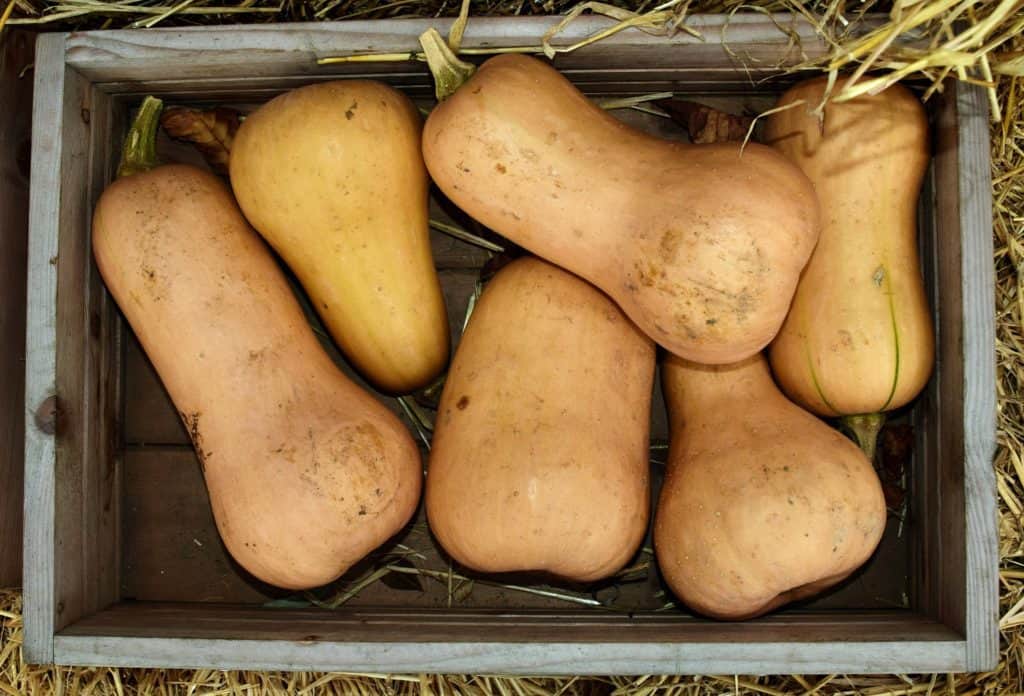
Butternut squash is also a good source of vitamin E, thiamin, niacin, vitamin B-6, folate, pantothenic acid, and manganese.
Butternut squash, is an excellent source of fiber, potassium, magnesium, phosphorous, and Vitamins A and C. The nutritional content of squash makes it beneficial for digestion, blood pressure, and for healthy skin and hair, among others.

How to Cure: Curing pumpkins and other winter squash is the process of creating an environment suitable for the skins of the fruit to harden into thick and durable rinds to protect the inside flesh from deterioration.

When cured correctly, winter squash can be preserved and enjoyed up to five months after harvest. Curing will take a 7-10 days (a bit longer for extremely large fruits) just after harvest. After removing the fruit from the stem, gently remove or brush off any dirt, and place them indoors to a greenhouse or sunny windowsill where they can bathe in the sun.

The fruit should be left to cure for 2-3 days (or more) on each side (turned once gently), so the entire fruit has had sun and air exposure. During curing, the fruit continues to “breathe” but as its skin hardens, the rate of respiration (and thus the rate of spoilage) slows down. Additionally, many gardeners will apply a final gentle rub down with olive oil on the outer skin to create a final moisture-tight seal prior to storage.

Storage: After curing your winter squash, you will want to store the fruit in a dry, well ventilated, and dark building with a temperature between 50° and 55°F. (We like to store most of our fruit on the top shelf of the root cellar).

If you plan on storing the fruit for more than three weeks, do not stack them more than two fruits deep if possible, as the weight of the top fruit may damage the lower fruit. Similarly, avoid storing your winter squash near other stored tree fruits which can emit ethylene gas and speed the aging process.

If you have enough space available, store the fruit in a single layer so that they do not touch each other. Such an arrangement will minimize the risk of rot. Many gardeners prefer to keep the fruit raised from hard surfaces, on racks or wire mesh cushioned with straw, paper, or cheesecloth (or other porous material) allowing for air to circulate around the fruit.

We typically bring some of the brighter specimens into our home to decorate the entryway or table centerpiece with an autumn décor, then use them for meals as the season wears on.

Recent studies have revealed that winter squash aids in the release of sugar inside of our digestive tract after being eaten, and lessens our overall glycemic response to other foods.
The vivid orange flesh of many winter squash varieties is due to their amazing concentration of carotenoids, including beta-carotene, alpha-carotene, and other carotenoids that can be converted into active forms of vitamin A (retinoids).

Heath Benefits of Winter Squash: The health benefits of winter squash are worth noting. Many people love the look of winter squash but fail to realize that those vivid colors are due to their high concentration of carotenoids such as beta-carotene, alpha carotene, and other antioxidant carotenoids such as auroxanthin, beta-cryptoxanthin, flavoxanthin, luteoxanthin, neoxanthin, neurosporene, phytofluene, taraxanthin, violaxanthin, and zeaxanthin.

Winter squash are also high in fiber, as well as a rich source of vitamins A and C, manganese, copper, potassium, folate, manganese, Vitabin B6, vitamin K, and omega-3 fatty acids. As a matter of fact, did you know that one cup of winter squash contains up to 60% of your daily recommended intake of vitamin A? Some have even called winter squash super foods for the nutrition per calorie punch they pack in each bite.

Family Favorite Recipes: Our family loves enjoying winter squash throughout the holiday season and well into winter. One of our favorite dishes is my mom’s roasted butternut bisque. It’s a family recipe passed down from my grandfather’s youngest sister and is absolutely delicious. You can find the recipe here.

Delicious warm roasted butternut bisque

Another family favorite is our Aunt Kathy’s pumpkin cookies from scratch. You can find the recipe for the cookies here. There is nothing better than the spell of fresh pumpkin cookies wafting through the air on a blustery October afternoon.

So, whether you just want to try something new in your garden, or you would like to add a little color, vitamin and variety to your family’s winter diet, we highly recommend adding some winter squash to your garden. Planting, curing and storage are relatively simple, and the benefits are apparent in the vivid colors and flavor these garden treasures can add to your home.

What are Some Healthy Alternatives to using Pesticides in my Home, Lawn or Garden?

It is best to scout your yard and garden in the early morning, or evening when insect pests are most likely to be actively feeding.

What are Some Healthy Alternatives to using Pesticides in my Home, Lawn or Garden?

When it comes to lawns and gardens, a lot of folks needlessly apply fertilizers and pesticides without knowing if these measures are necessary. A closer look often reveals that these “treatments” do more harm than good to the home environment. To avoid creating an over abundance of chemicals in your top soil and lawn, (which can decimate beneficial bug populations) we recommend taking a few simple measures first. This approach is friendlier to the ecosystem and uses a combination of techniques that minimize risks to humans and the natural environment. This kind of approach is known as Integrated Pest Management (IPM).

This article discusses some of the basic IPM methods you can utilize to aid in the treatment and prevention of pests in to your lawn, garden, and home.

Scouting your home, yard or garden for trouble spots does not require a professional. Look for yellowing leaves and stems, lift rocks, throw away debris, and fix leaky taps or hoses.
Scouting your home, yard, and garden for pests should be done regularly, but can be done in minutes. Quite literally, an ounce of prevention is worth a pound of cure when it comes to pests.

1. Before taking any preventative measures, you will first want to scout your property for problems or damage caused by weeds, vermin, or insects. By scouting your yard for damage on a regular basis you can ensure that a problem actually exists before attempting to treat one. Additionally, once you make scouting a regular practice you’ll be surprised how often you will recognize issues that need attention in the early stages, allowing for “spot treatment” as opposed to the general broadcasting of chemicals across an entire lawn or garden. Scouting also involves taking action to prevent pests from becoming a problem, such as growing a disease resistant crop, caulking or filling cracks to keep pests from entering your greenhouse or home, and fixing leaky water sources or altering water flow that may increase mold, root disease or weeds.

It is important that you first identify and recognize which insects or organisms interfere with the growth of desirable plants or cause damage to your home or landscape structures versus insects or growth that are beneficial. Scouting also involves monitoring and assessing pest numbers and damage, and deciding when management action is necessary.

When and if you do decide to take action to control or eradicate a pest problem, the next step is to decide how you will go about doing this without mindlessly broadcasting a poison or insecticide.

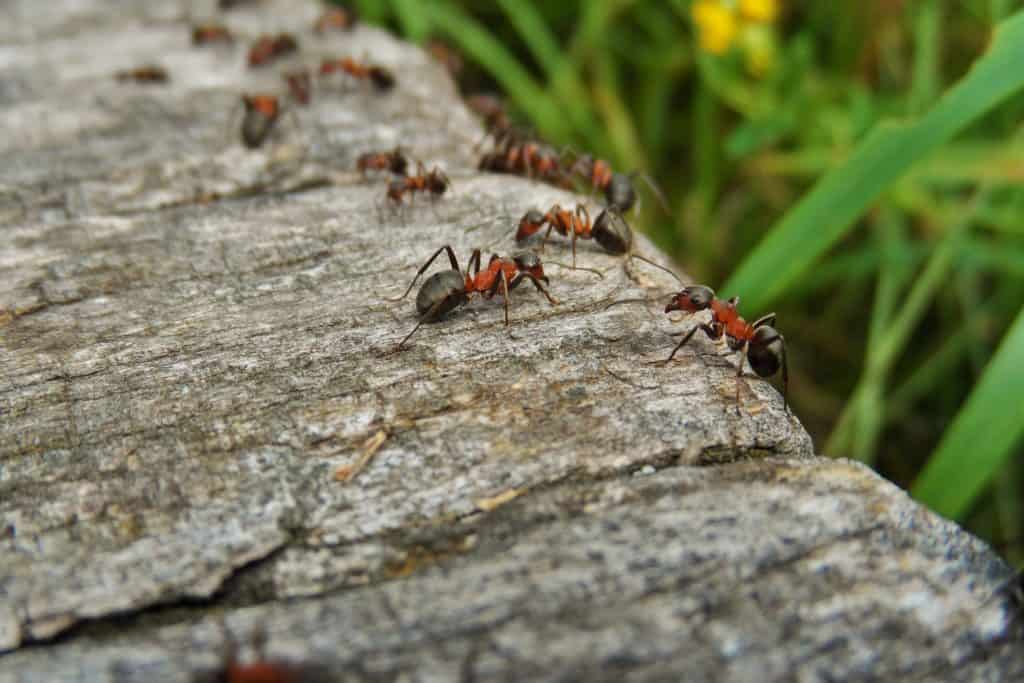
Carpenter ants can cause damage to wooden structures for nesting if left unchecked. Their destruction is commonly confused with termite damage.

2. One treatment method to consider is the use of microbial insecticides as opposed to chemical and toxic pesticides. Microbial insecticides are single celled organisms such as bacteria, fungus, protazoa, viruses, or nematodes that have been formulated for use in another manner such as insecticides. They are nontoxic, and do not pose a disease risk to humans or other organisms not related to the target insect. They allow for specific targeting of the pest or insect you are wishing to be rid of without risking killing off other beneficial insects.

There are some disadvantages to using microbial insecticides, (such as loss of efficacy when exposed to sunlight or extreme heat), but generally, if you are paying close attention to your lawn and garden and able to spot treat, a microbial insecticide can be perfect.

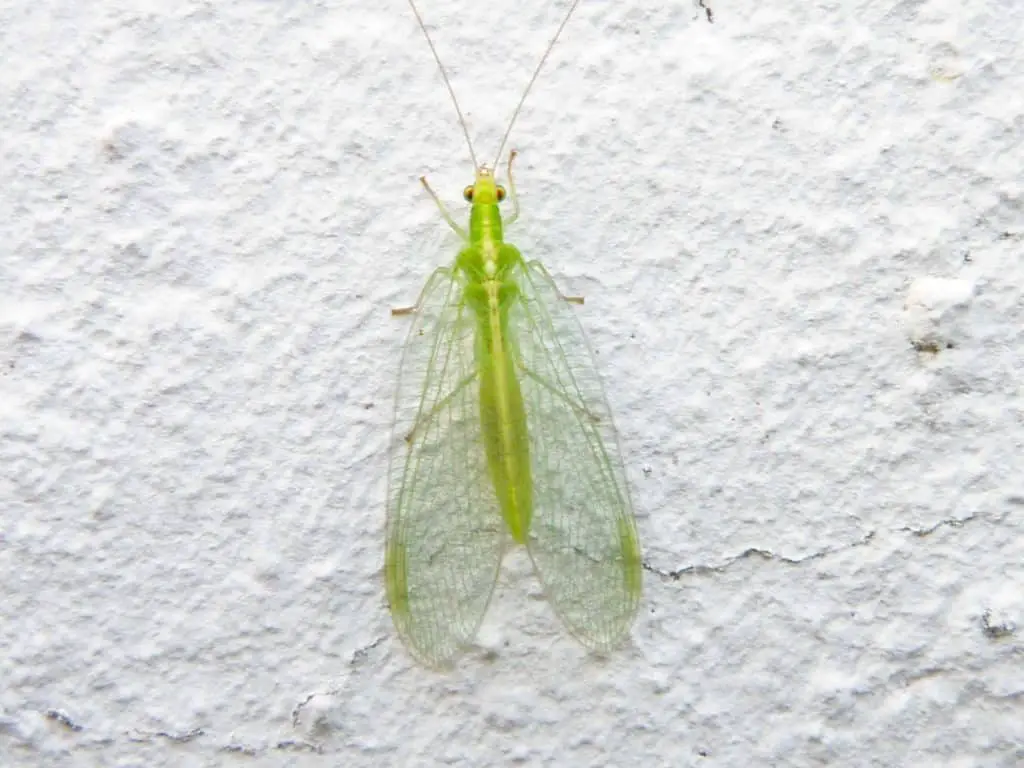
If you find a green lacewing in your garden consider yourself lucky. Green lacewing are an excellent addition to any IPM (Integrated Pest Management) program, providing benefits throughout the growing season.
The green lacewing is an excellent beneficial insect to have in your yard or garden. Lacewing larvae are active predators of soft-bodied insect pests such a aphids, spider mites, thrips, whitefly, leafhoppers, beetle larvae, and mealybugs.

3. Additionally, you should use and conserve beneficial insects. Some bugs are a gardener’s best friend because they spend their lives consuming the critters that will damage your plants. These are the bugs you want to keep around, such as the green lacewing, lady bug, praying mantis, syrphid fly, aphid parasite, bumble bee, pirate bug, mealybug destroyer, and spider mite predator. For a good list of beneficial bugs, check out this article https://www.planetnatural.com/beneficial-insects-101/ by planet natural Research Center. This list of commonly found beneficial bugs will help you spot and recognize those “good bugs” so you can leave them alone, and allow them to do their job. If you don’t have beneficial bugs in your garden and would like to release some, many species are available for purchase from garden centers for release into your yard.

Keeping beneficial insects alive will help keep your garden pest problems at an acceptable level, and reduce your need for harmful insecticide use. Of course, the first step in conserving these insects is knowing how to recognize them. Another way to conserve these beneficial critters is to limit your use of insecticides. Try and use insecticides only when you notice pest populations great enough to cause significant damage to your lawn and garden. Many insecticides are designed to broadcast generally, and will kill all insects, including those that may be beneficial. If you are set on using an insecticide product, it will serve you well to shop wisely and find one that is more specifically targeted at your specific pest problem.

Another way to encourage the population of beneficial insects is to maintain a habitat that is friendly and attractive to these types of bugs. For instance, some beneficial insects require pollen and nectar sources. Therefore, in such instances it is helpful to keep some small flowers and flowering weeds (such as clovers or Queen Anne’s Lace) in and around the yard. There are also artificial food supplements containing yeasts and sugars that can attract beneficial insects.

Overall, just don’t be alarmed when you notice the presence of some garden pests. Remember that having some undesirable insects in your garden will help maintain the presence of beneficial insects as well.

4. An additional bio-friendly treatment measure involves the use of pest barriers or insect traps. Insect traps may be used to monitor and detect pests and to reduce an insect pest population. The most common types of insect traps available use pheromones to lure and catch, or alter the behavior of specific insects. Pheromones are chemicals produced by organisms that trigger a social response (alarm, aggression, flight, communication, food trail, boundary marking, attraction, or sex) in other members of the same species. Pheromone traps use attractants produced by certain insect species that mimic or block these chemical triggers. Other products use pheromone deterrents, or negative signals that will discourage or interrupt the insects’ natural use of pheromone signals. An example of this we use in our own home is peppermint essential oil to deter ants from signaling food sources. We simply place a few drops of peppermint oil on a cotton ball, and place the cotton ball in the location where we notice ants have invaded our home. Within minutes, the ants are unable to continue pheromone signaling and will move elsewhere.

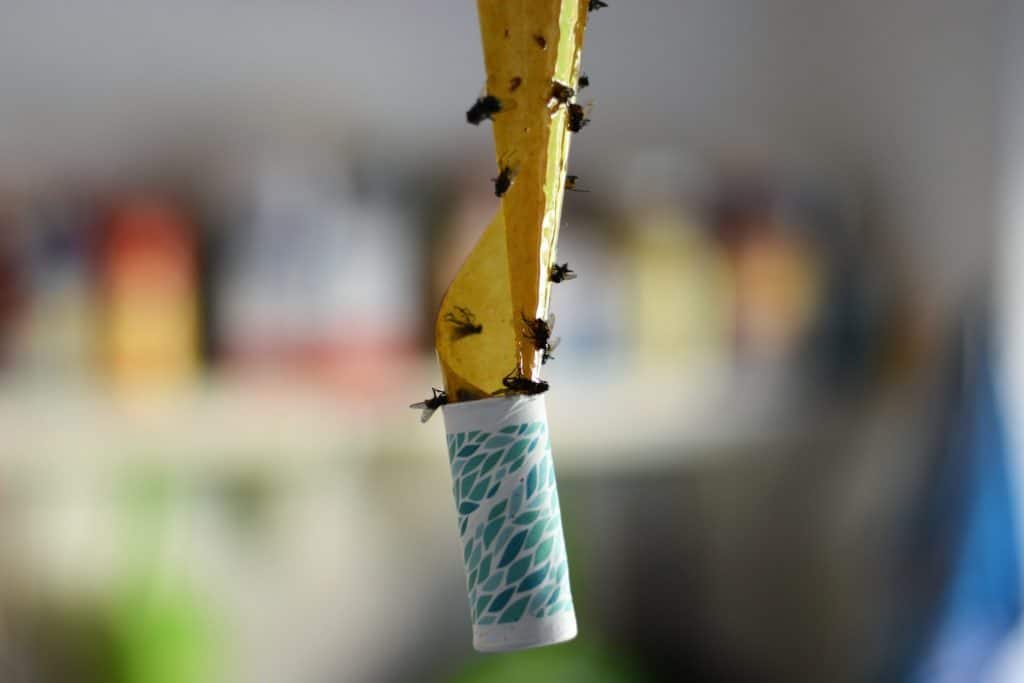
Sticky Traps attract pest insects using a specific color spectrum, or pheromones.
Some of the pests readily trapped by sticky traps include flies, cockroaches, spiders, beetles and other crawling insects, such as mites and scorpions.

Other traps use a sticky surface method to intercept crawling or flying pests in higher traffic areas or will bait the pests with food or chemicals into a receptacle from which the insects cannot escape. While these methods are helpful in reducing the insect pest population in your home or garden, they are most effective if used in conjunction with other integrated pest management methods, such as microbial insecticides or beneficial insects (discussed above). Another related method for pest control is the use of poisoned baits which can kill the insect itself, or when the insect takes the bait back to its nest and poisons other insects.

Pest barriers can also be an extremely effective alternative to pesticides. Examples of pest barriers include plant covers, copper sheeting, screens, hot caps, dust barriers, diatomaceous earth, row covers, sticky barriers or adhesives, and cutworm collars. Sometimes the best form of damage prevention is to simply keep pests away with physical barriers. As discussed above, caulking up or filling cracks in a greenhouse or structure can prevent many crawling insects from getting inside. Additionally, various sticky traps and sticky barriers around tree trunks or shrubs (such as tanglefoot) can keep ants from climbing up the plant, another popular impediment method is the use of copper barriers to keep snails or slugs from reaching plants in raised beds.

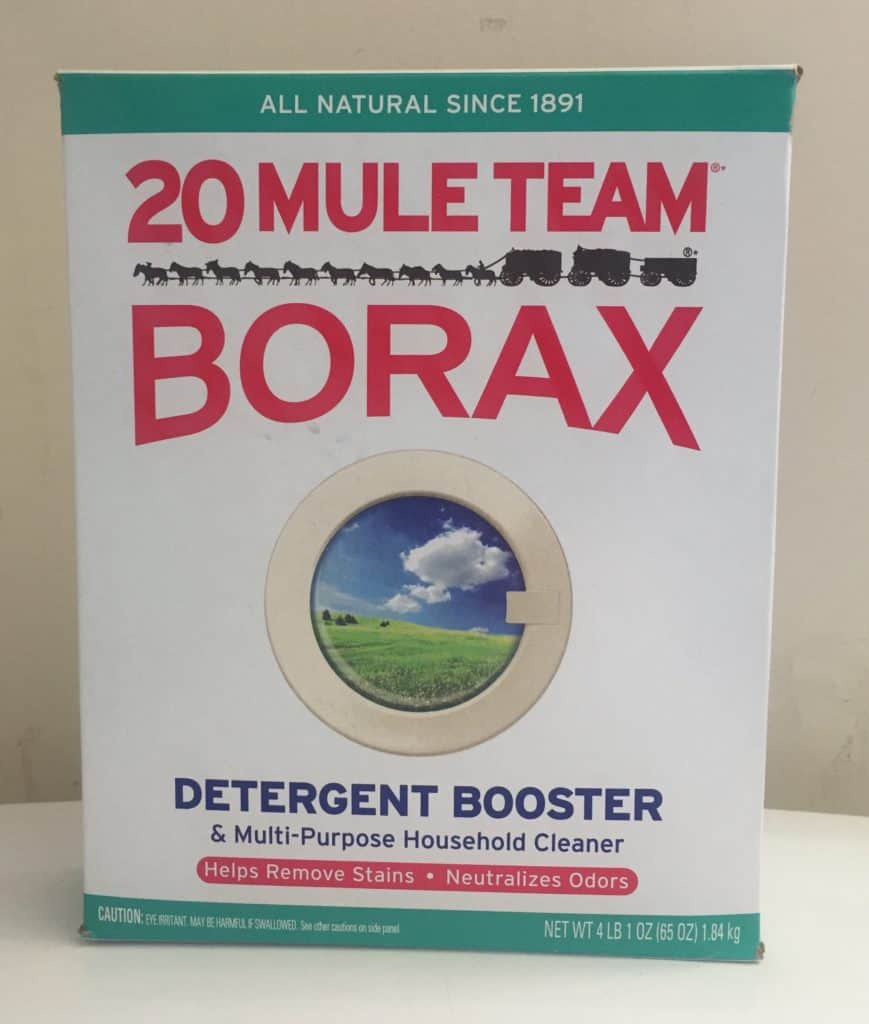
Borax is very effective in killing and controlling various types of insects
Borax is a highly recommended safe method of insect control. It can be used indoors or outdoors and is known to repel fleas, silverfish, ants, cockroaches and beetles

5. Many herbalists and gardeners have also established completely natural methods of pest removal and treatment. Diatomaceous Earth, Borax soap, essential oil sprays and sent beacons (lemon, basil peppermint, vinegar), fresh basil leaves, Bay leaves, garlic, and ground cayenne peppers.

Diatomaceous earth is a fine powder comprised of the fossilized remains of marine phytoplankton (or algae) with a very hard shell. The powder is very high in silica, and is ground so small that the sharp silicon edges can compromise the waxy coating of bugs with an exoskeleton (such as fleas, ticks, or mites) and cause death. Amazingly, diatomaceous earth does not harm humans (or any mammal for that matter), and is even used in many grain based foods for storage purposes. Additionally, Borax (or sodium tetraborate decahydrate or sodium borate), (and NOT TO BE CONFUSED WITH BORIC ACID) is a naturally found alkaline compound that is mined from the earth and refined into a powder that is used for many purposes, but typically known for it’s use as a laundry detergent aid. Borax is also a very effective method to kill pests such as ants, silverfish, fleas, cockroaches, grain weevils and beetles. Borax can be applied in a thin layer in insect trafficked areas, and when the insect walks through the dust, it clings to their legs (or is ingested) and carried back to their nests. The Borax, when ingested, poisons the insect through stomach and nervous system dysfunction.

Using essential oils in the garden can deter pests and pathogens from infecting your plants. Strong, healthy plants resist disease. As a result, they can produce higher yields, which is what we all want. Many plants have symbiotic relationships which you can utilize by either growing the plants next to each other or by adding the essential oil of the beneficial plant to water.
Essential oils such as peppermint, lemongrass, mint, or orange offer antifungal, insecticidal, and anti-inflamatory properties, and can be mixed and matched to target, repel and even terminate the bugs plaguing your home.

Additionally, essential oils such as peppermint, lemongrass, mint, or orange offer antifungal, insecticidal, and anti-inflamatory properties. They can also kill external bacteria, and their smell is highly offensive or debilitating to numerous pests such as mice, ants, spiders and mosquitoes. As mentioned above, we use peppermint oil in our home as an insect repellent, and have had great success. You can find a lot of good information as well as essential oil home remedy recipes here. https://www.naturallivingideas.com/essential-oils-to-repel-bugs-pests/

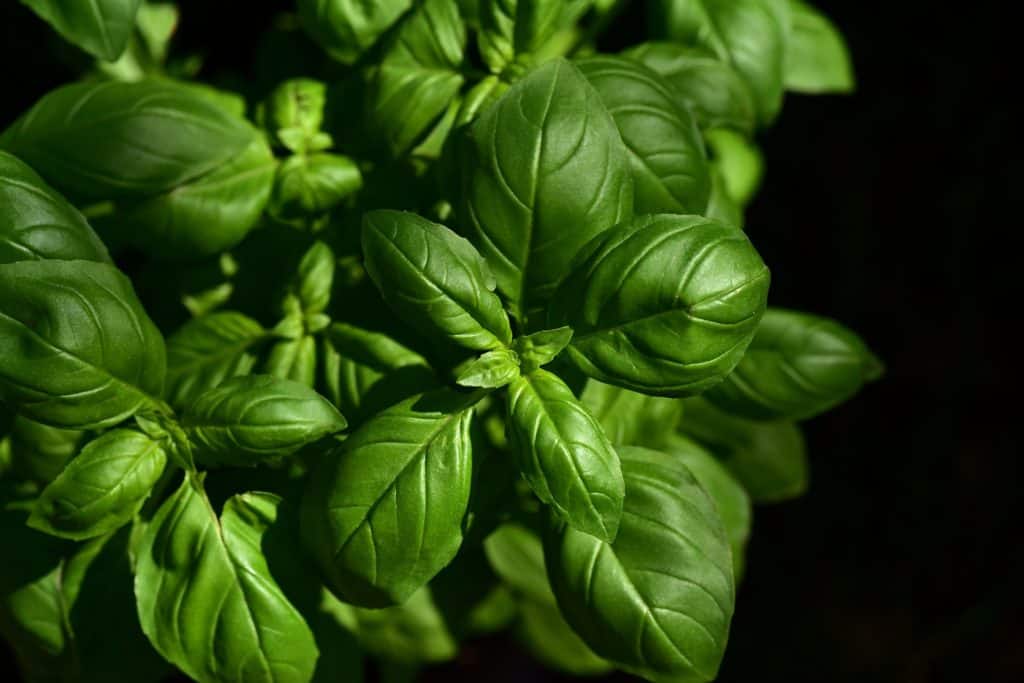
Basil is a fantastic bio-friendly deterrent for many pests such as tomato hornworms, white flies, and aphids.
Try basil as a natural insect repellent. It can be used as a companion plant or rubbed on the skin for personal protection. You can also crush or burn basil leaves to deter unwanted pests. Doing so eliminates pests without harming beneficial insects.

Basil, cayenne, and bay. Basil is one of many herbs that can also be used as a natural domestic insect repellent. Naturally occurring basil leaves contain four mosquito repellent substances, including estragole, citronellal, limonene and nerolidol. Simply rubbing basil leaves together can inhibit fly and mosquito sensors from detecting potential food targets (including as humans). Similarly, because of their strong aroma, bay leaves, cayenne pepper or garlic can also be used as natural insect deterrents.

In conclusion, before you simply reach for that pesticide to rid your home or garden of pesky insects, take the time to determine whether or not there really is a problem. Then, if you do decide to take action keep in mind that there are numerous biologically friendly and effective methods for treating and ridding your home and garden of unwanted pests.

Is the Praying Mantis Good for my Garden?

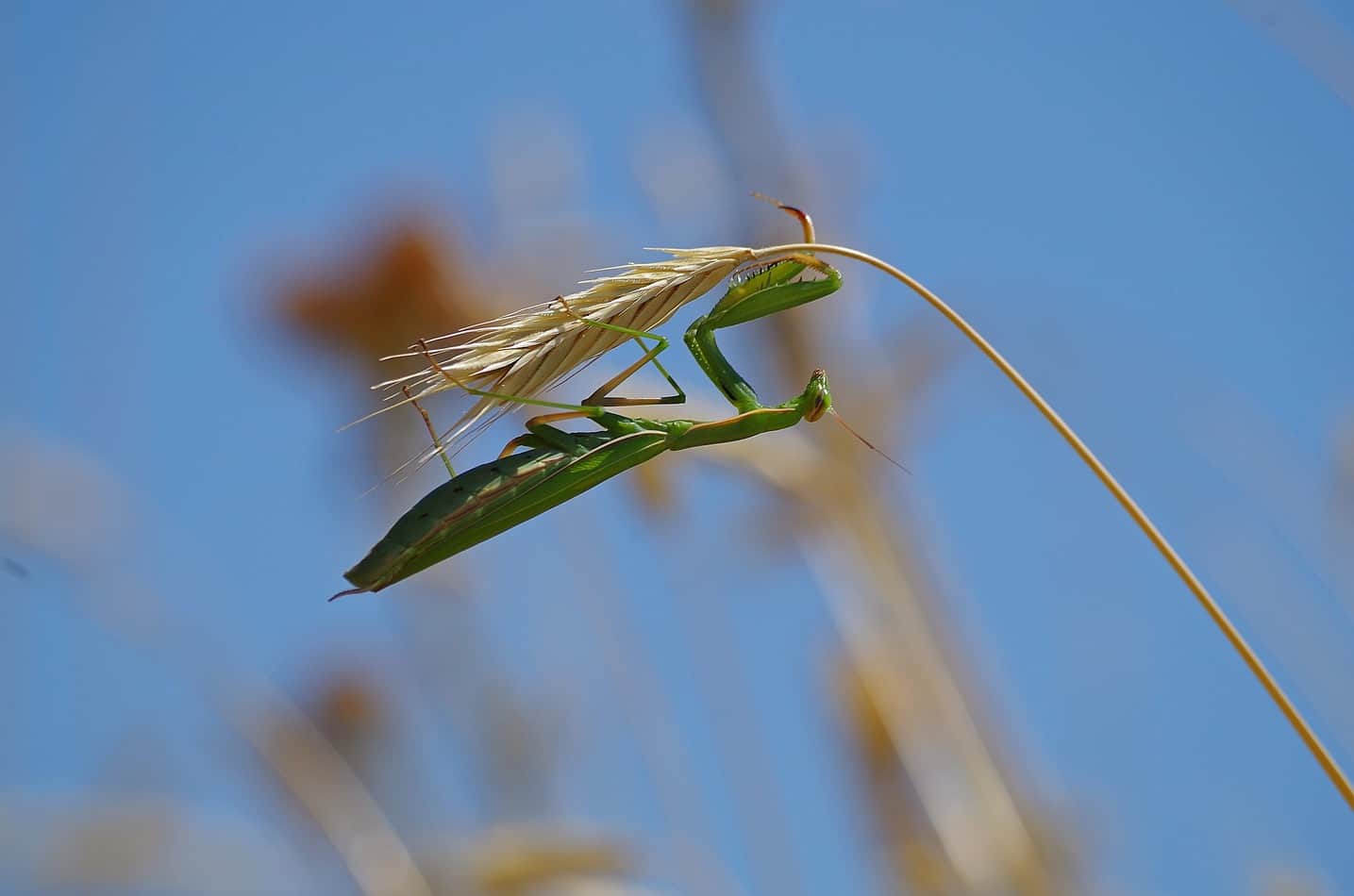
The praying mantis lives on plants, trees and shrubs, and can change color to camouflage itself depending on its habitat.

Is the Praying Mantis Good for my Garden?

The answer is YES, ABSOLUTELY! If you find a praying mantis in your garden let him be, and hope for more. The praying mantis is one of many insects that are considered beneficial for gardens. This is because the praying mantis will feed on other insects considered pests to your growing plants, making the mantis a safe biological weapon against the onslaught of other insects that can plague your garden.

This article explores the benefits of having a population of praying mantis insects in your garden, and how you can get some if you don’t already have any.

Why is a praying mantis helpful for my garden?

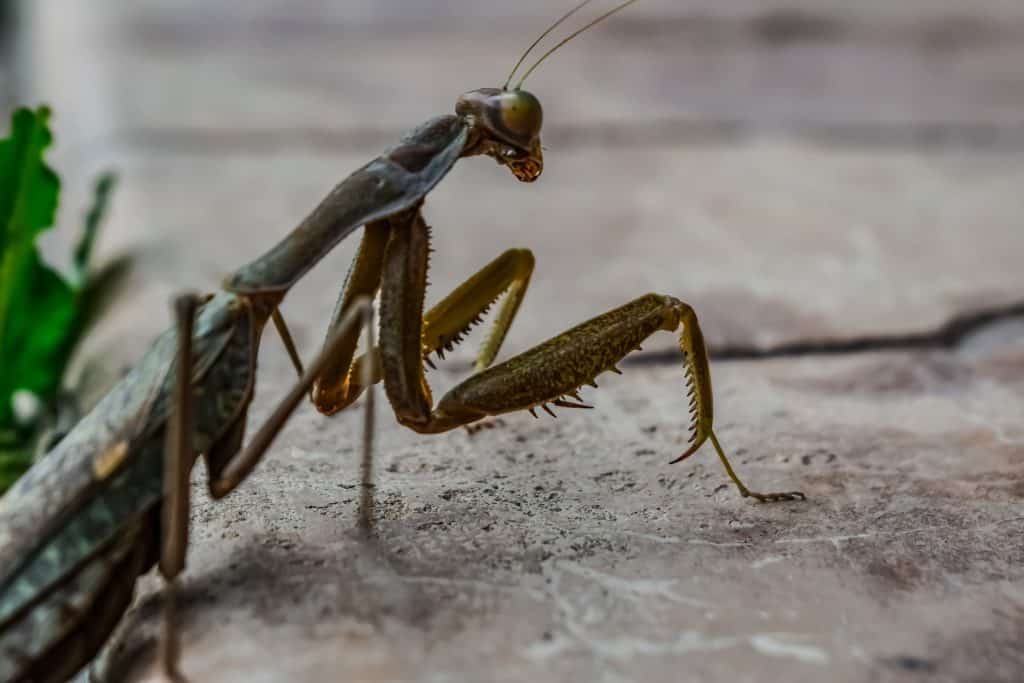
The praying mantis (scientific name Mantis Religiosa) is an invertebrate insect ranging from half an inch to six inches long and named for its very prominent front legs that are bent and held together while resting or hunting, at an angle that suggests the position of prayer. The mantis is an adept, predaceous hunter, and voracious eater. Not only does the mantis feed round the clock, but most species of mantis are able to fly. This enables them to change hunting habitat when needs be, or to find areas of a garden most fertile with insects that may plague your garden such as crickets, grasshoppers, moths, mosquitoes, flies, or caterpillars.

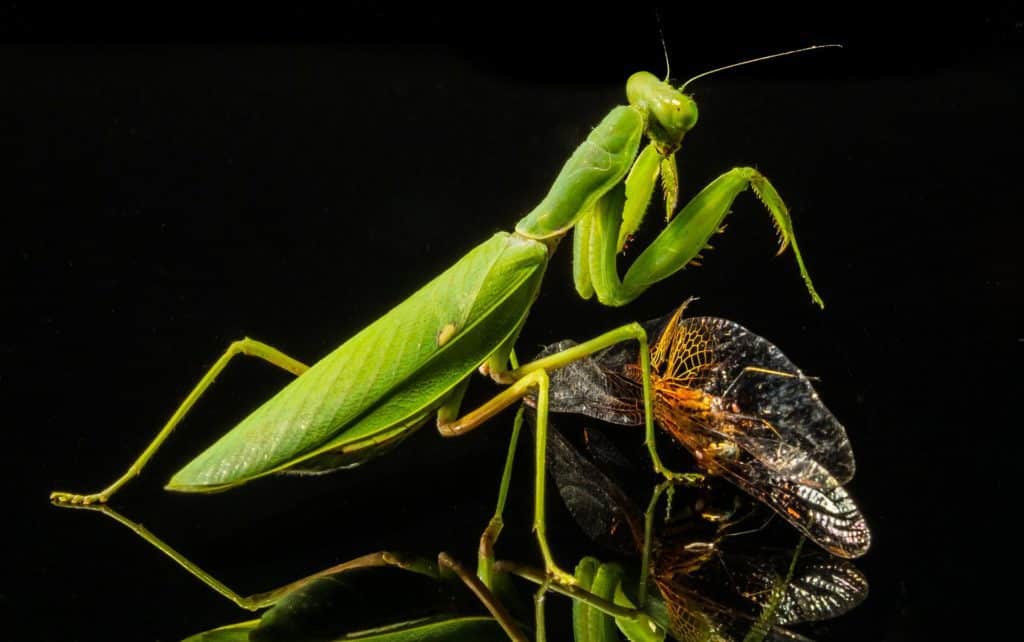
praying mantis, or Mantis Religiosa will feed on garden pests such as crickets, grasshoppers, moths, mosquitoes, flies, or caterpillars.
The praying mantis devouring a dragonfly.

With a giant triangular head poised on a long neck, or elongated thorax, two large compound eyes and three smaller ones, the mantis has a 300° field of vision. (Interesting fact: The mantis is the only insect proven to have 3D vision, like that of humans). A hunting mantis can spot even the slightest movement from as far as 60 feet away. In addition to its fantastic eyesight, the mantis is known for its brilliant camouflage. Typically, the mantis will appear brown or green, but often will take on the color of its habitat. Depending on its location, a praying mantis can mimic leaves, bark, twigs, and even other insects. In some habitats, the flowering mantis will mimic the appearance of different flower petals or leaves.

The praying mantis will lie in wait or patiently and slowly stalk their quarry. It will then ambush and devour its prey with strong sharp mandibles while holding them in its powerful forelegs barbed with overlapping rows of spikes.

These aspects make the mantis a killing machine. Known for being cannibalistic if it encounters another mantis, the female of the species is perhaps best known for its macabre tendency to devour its mate during or after mating. The mantis is a fearsome predator capable of killing prey three times its size. In tropical climates, the mantis has been known to prey upon small rodents, snakes, and occasionally hummingbirds.

How can I bring or attract mantids to my garden?

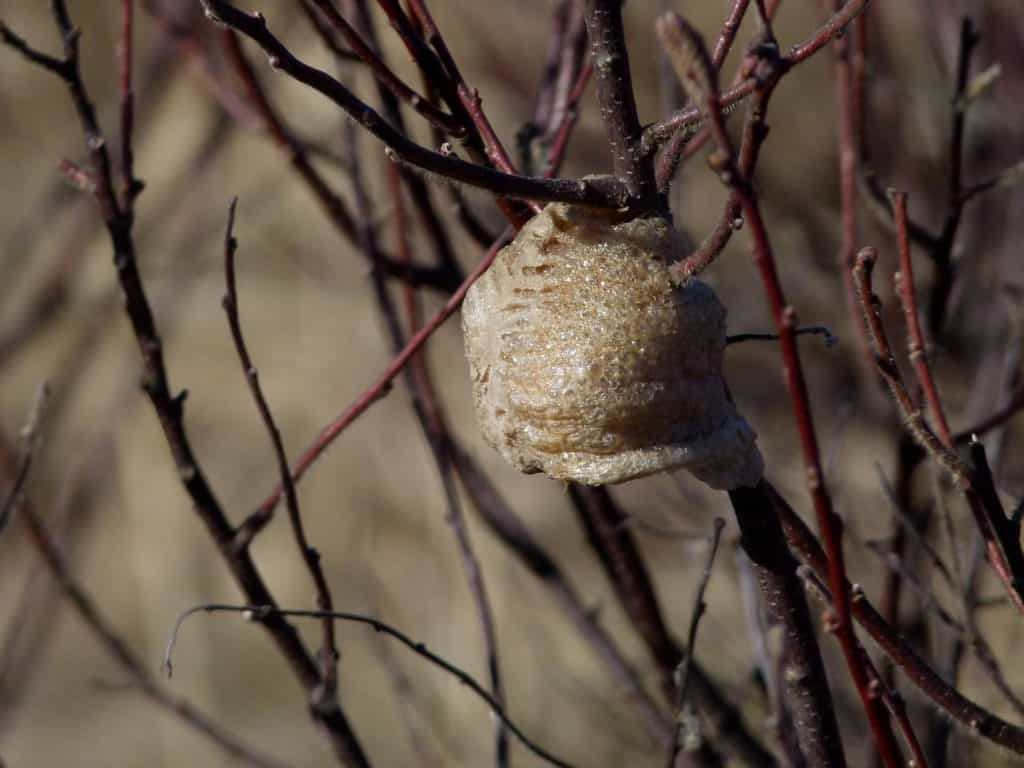
The best way to determine if you have a mantis population in or near your garden is to do some simple recognizance. Spend some time looking for signs of the mantis. Perhaps the most noted sign of a mantis, other than finding a specimen yourself, is finding a mantis egg case or sac. The praying mantis egg sac is usually white, cream, or tan colored, about one inch long, and rectangular or bulb shaped. The eggs are surrounded by a frothy foam (called ootheca) which later hardens into the egg casing.

The praying mantis egg sac will lay dormant during the winter, and begin to hatch as soon as temperatures warm up in spring months
The praying mantis egg sac is usually white or tan, and can be found on twigs and stems, fences, house siding, and house eaves.

Female mantids will lay their egg sacs on twigs and stems, fences, house siding, and eaves. We have found them in all of these places, including mailbox posts and an old unused wooden basketball standard. If you find a sac, you can carefully relocate it to your garden, where it will hatch and release the nymphs as temperatures warm. Each sac may contain as many as 300 mantis eggs. Of these 300, only one fifth will survive to adulthood. The egg sac of a praying mantis will lay dormant during the winter, and begin to hatch as soon as temperatures warm up in spring months. Many people will hunt for mantis egg sacs in the fall and winter for relocation into their gardens come spring and summer. The best time to hunt for egg sacs is from November through April.

Another action you can take to encourage praying mantis to visit your garden is to cease using any form of pesticides. Though you may worry that suspending the use of pesticides will increase your insect population, if you have a mantis population, they will have roughly the same effect, and are biologically, much friendlier for the environment.

Can I buy praying mantis for my garden?

The praying mantis has a rather complex life cycle, including an overwinter egg period, followed by a nymph stage, adulthood, and often cannibalistic mating ritual. Mantis egg sacs are found naturally occurring in most of North America, however, in more frigid climates may need to be purchased. Though you can purchase mantis egg casings at any time during the year, if you store them indoors, keep in mind that the warmer temperatures of your home may encourage hatching early. If this happens, you will likely need to separate your hatchlings into separate containers so they will not eat each other. It is also necessary that the container holding the nymphs has air holes, and a moist cotton ball (or other moisture source) placed inside. You will need to feed the babies (we recommend aphids or fruit flies) until the temperature outside warms up enough for them to survive when released. Caring for mantis nymphs and babies can be time consuming. For this reason, we recommend buying the egg casings in the late winter and hatching them for spring release in your garden. An alternative to this, if you do not have ready access to purchase egg casings in the winter, is to simply store the egg casings in a container (with air holes) in your refrigerator, to mimic winter temperatures.

The praying mantis lives on plants, trees and shrubs, and can change color to camouflage itself depending on its habitat.
The praying mantis lives in all habitats worldwide, and is found on all continents except Antartica

Most insect dealers will sell mantis egg casings for this purpose. If you are unable to locate an insect dealer near you, we highly recommend you purchase for mail delivery from Natures Good Guys at https://www.naturesgoodguys.com/products/praying-mantis-egg-cases . We have ordered from this company in the past and have had a good experience. Through their website, you can buy two mantis egg cases for under $7, that will arrive well preserved and ready to hatch in one to two months. We highly recommend this company for the good work they are doing to promote biologically safe and responsible pest control measures.

Are there any negative aspects of encouraging the mantis population in my garden?

Though there are numerous benefits of having a mantis population in your garden, there are some adverse affects to consider as well. Most notably, though the mantis will hunt and devour insect pests, it does not know the difference between insects that are beneficial or harmful to your plants, and may decimate garden-beneficial insects. Keep this in mind before purchasing or releasing a mantis population in your home garden. Perhaps you are already benefiting from the presence of beneficial insects the mantis may see as prey. By adding the mantis to the habitat, you run the risk of decimating the presence of these other beneficial bugs.

Overall, the praying mantis is a fascinating and complex insect that can prove very beneficial to gardeners or herbalists seeking to remove pesky insects from their gardens without requiring the use of chemicals or pesticides. They can also be kept as a pet, but that is the subject for a different day.